
Emotional Wellness for Seniors and the Pursuit of Happiness
Why Emotional Wellness for Seniors Is the Foundation of a Happy Later Life
Emotional wellness for seniors is the ability to understand, accept, and manage your feelings — and to cope with the changes and challenges that come with aging.
Here’s a quick overview of what actually moves the needle:
- Stay socially connected — join clubs, volunteer, or schedule regular calls with friends and family
- Move your body daily — even a 15–20 minute walk releases mood-boosting endorphins
- Build a routine — consistent sleep, meals, and activity reduce anxiety and improve stability
- Practice mindfulness — deep breathing, meditation, or journaling for just 10 minutes a day helps manage stress
- Seek help early — persistent sadness, withdrawal, or anxiety are treatable, not just “part of getting older”
Aging brings real rewards — wisdom, perspective, and hard-won resilience. But it also brings genuine challenges: retirement, the loss of loved ones, physical changes, and the creeping risk of loneliness. These aren’t small things. They shape how you feel every single day.
The scale of the issue is larger than most people realize. By 2030, one in six people worldwide will be aged 60 or over. And right now, approximately 14% of adults aged 70 and older are living with a mental disorder — most commonly depression or anxiety. Yet the majority of these conditions go unrecognized and untreated, often because people assume feeling low is simply what aging looks like.
It isn’t.
Mental and emotional health are inseparable from physical health in later life. Poor emotional wellness raises the risk of cognitive decline, weakens the immune system, and reduces quality of life in measurable ways. The good news? Small, consistent changes make a real difference — and it’s never too late to start.
Defining Emotional Wellness for Seniors and Common Challenges

When we talk about emotional wellness for seniors, we aren’t just talking about the absence of a mental health diagnosis. True wellness is an active process of awareness and acceptance. It involves navigating the “Golden Years” with a sense of purpose and the resilience to handle life’s inevitable transitions.
According to the World Health Organization, mental disorders among those aged 70 and older account for nearly 7% of the total years lived with disability. As we move through 2026, the global population shift is impossible to ignore: the number of people aged 80 or older is expected to triple by 2060. This makes Aging Wisely more than just a goal; it is a public health necessity.
Senior Mental Wellness: Nurturing Emotional Health requires acknowledging that feelings of grief or frustration are valid, but they shouldn’t become a permanent residence. Emotional health is about finding the tools to move through those feelings back toward a state of balance.
The Importance of Emotional Wellness for Seniors in 2026
In 2026, the connection between the mind and body has never been clearer. High levels of emotional wellness are linked to:
- Enhanced Cognitive Health: Keeping the mind engaged and the spirit positive can actually reduce the risk of dementia.
- Physical Longevity: Seniors with a positive outlook often have better cardiovascular health and stronger immune responses.
- Resilience: The ability to “bounce back” from a health setback or the loss of a friend is a hallmark of emotional strength.
Risk Factors: From Retirement to Social Isolation
Several factors can pull a senior’s emotional health off course. Retirement, while often celebrated, can lead to a loss of identity and daily structure. Bereavement—the loss of a spouse, siblings, or lifelong friends—can create a vacuum of social support.
Furthermore, ageism and elder abuse (affecting one in six older adults) are significant but often hidden risk factors. Loneliness, which affects about a quarter of the senior population, is particularly toxic; it raises cortisol levels, which can damage memory and heart health.
It is vital to distinguish between the natural “blues” and a clinical issue.
| Feature | Normal Aging Sadness | Clinical Depression |
|---|---|---|
| Duration | Temporary, comes in waves | Persistent for 2 weeks or more |
| Triggers | Usually tied to a specific loss | May occur without a clear cause |
| Physical Symptoms | Occasional fatigue | Changes in appetite, sleep, and chronic pain |
| Interest | Still enjoys some hobbies | Complete loss of interest (anhedonia) |
| Social Life | May seek comfort from others | Total social withdrawal |
Practical Strategies to Improve Emotional Wellness for Seniors

Improving your emotional state doesn’t require a total life overhaul. It starts with small, actionable Senior Health Tips that build momentum over time. One of the most effective ways to boost mood is through Life Enrichment Programs that offer a mix of physical activity and social interaction.
Daily Habits to Support Emotional Wellness for Seniors
Structure is the enemy of anxiety. By building a reliable daily routine, you provide your brain with a sense of safety and predictability.
- Prioritize Sleep: Most adults need 7 to 9 hours of sleep. Poor sleep is a direct trigger for irritability and cognitive fog.
- Hydration and Nutrition: A balanced diet rich in leafy greens and lean proteins supports brain chemistry.
- Gratitude Journaling: Ending the day by writing down three things you are thankful for shifts the brain’s focus from “lack” to “abundance.”
- Morning Movement: Starting the day with Senior Citizen Exercises like stretching or a short walk can set a positive tone for the remaining hours.
Staying Active and Socially Connected
Social connection is perhaps the single most powerful “medicine” for emotional wellness. Loneliness and isolation are as damaging to health as smoking 15 cigarettes a day.
To combat this, many seniors are turning to Senior Fitness Trends like pickleball or water aerobics, which combine heart-pumping exercise with laughter and teamwork. Befriending initiatives and intergenerational programs—where seniors mentor younger people—provide a sense of “mattering” that is crucial for mental health. Whether it’s a walking club in Anne Arundel County or a book group, the goal is to keep your calendar filled with meaningful faces.
Mindfulness, Hobbies, and Cognitive Resilience
The brain is like a muscle: if you don’t use it, you lose it. But it’s not just about “using” the brain for tasks; it’s about training the brain to find peace. Brain Health is deeply connected to how we manage stress.
Engaging the Mind Through Hobbies
Engaging in “mastery” activities—things that challenge you and provide a sense of achievement—is a cornerstone of Retirement Brain Fitness.
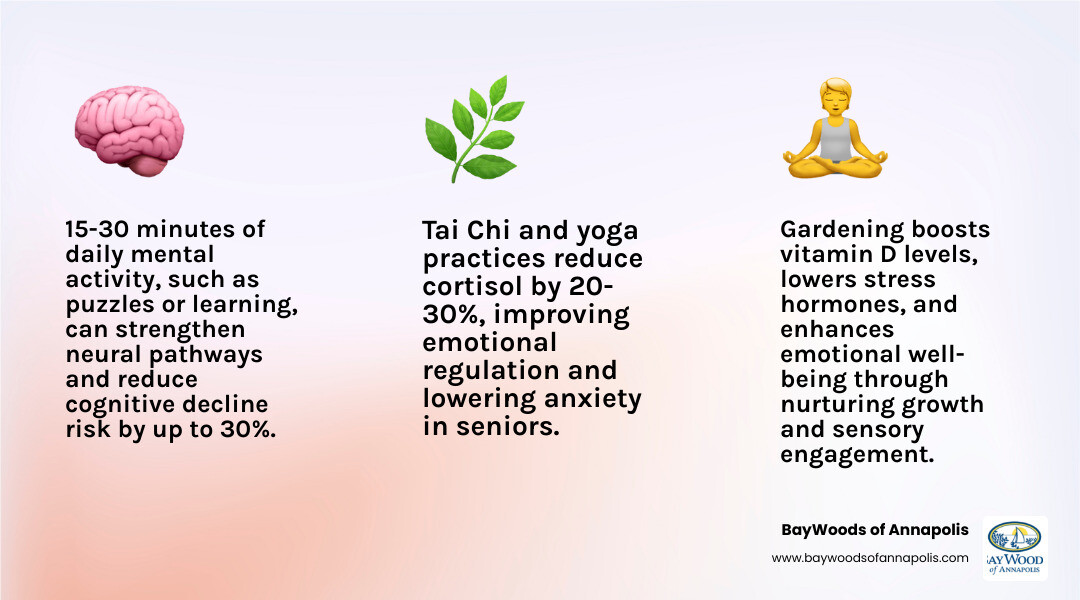
- Learning: Whether it’s a new language or a musical instrument, Life Long Learning keeps neural pathways firing.
- Creative Arts: Painting, knitting, or woodworking allows for self-expression and “flow,” a state where you are so absorbed in an activity that worries melt away.
- Gardening: This provides physical activity, vitamin D from sunlight, and the psychological reward of nurturing life.
Mindfulness Practices for Stress Reduction
Mindfulness is the practice of being present in the moment without judgment. For seniors, this can be a powerful tool for emotional regulation, especially when dealing with chronic pain or frustration over physical limitations.
- Deep Breathing: Simple exercises, like breathing in for four counts and out for six, can instantly calm the nervous system.
- Tai Chi and Yoga: These “meditation in motion” practices improve balance and reduce the “fight or flight” response.
- Body Scans: Mentally checking in with each part of the body can help identify where you are holding tension and allow you to release it.
Professional Support and Caregiver Resources
While lifestyle changes are powerful, they are not a substitute for medical intervention when it’s needed. One of the biggest hurdles to emotional wellness for seniors is the stigma surrounding mental health. Many seniors grew up in an era where you “just got on with it,” but modern medicine offers highly effective Depression in Elderly Adults: Strategies To Cope that can return joy to one’s life.
When to Seek Professional Help
It is time to consult a professional if you or a loved one experiences:
- Social Withdrawal: Stopping calls to family or skipping regular bridge games.
- Neglect of Self-Care: Forgetting to bathe, eat, or take vital medications.
- Persistent Sadness: A low mood that lasts more than two weeks and doesn’t lift with social interaction.
- Memory Concerns: While some “senior moments” are normal, significant confusion or personality changes should be evaluated.
Treatment options today are vast, ranging from talk therapy and support groups to medication and integrated care models like the WHO’s mhGAP (Mental Health Gap Action Programme).
The Role of Caregivers in Emotional Support
Caregivers are the frontline of emotional wellness. It is essential for family members to perform regular “emotional check-ins.” However, caregiving can be exhausting. To prevent burnout and ensure the best care, caregivers should utilize respite care and education programs. Preventing abuse—often born of caregiver stress—starts with having a strong support network for the caregiver themselves.
Frequently Asked Questions about Senior Mental Health
Is depression a normal part of aging?
Absolutely not. While depression is a common mood disorder in older adults, it is not a normal or inevitable part of getting older. Most seniors are satisfied with their lives. If persistent sadness or a loss of interest occurs, it is a treatable medical condition, much like high blood pressure or diabetes.
How does loneliness affect physical health?
Loneliness is a physical stressor. It triggers the body’s “stress” hormones, specifically cortisol. Over time, high cortisol levels can weaken the immune system, increase the risk of heart disease, and accelerate cognitive decline. Staying socially active is as important for your heart as a low-sodium diet.
What are the best ways to combat ageism?
The best way to fight ageism is through visibility and connection. Intergenerational programs that bring together students and seniors help break down stereotypes. On a personal level, maintaining a positive self-perception and staying involved in community advocacy ensures that seniors are seen as the vibrant, contributing members of society they are.
Conclusion
The pursuit of happiness doesn’t end at 65; in many ways, it’s just entering a new, more profound chapter. By prioritizing emotional wellness for seniors, you aren’t just adding years to your life—you are adding life to your years.
At BayWoods of Annapolis, we believe that wellness is a holistic endeavor. As a resident-owned CCRC in Maryland, we provide a unique environment where resident governance and a stunning waterfront setting on the Chesapeake Bay foster a true sense of belonging and purpose. From our Senior Lifestyles to our comprehensive Healthy Retirement Living programs, we are dedicated to supporting every dimension of your health.
If you are ready to embrace a lifestyle that prioritizes your emotional and physical well-being, we invite you to Contact us for more information. Let’s navigate the golden years together, with resilience, community, and joy.