
Beginner’s Guide to Montessori Senior Care
Why Montessori Senior Care Is Changing How We Think About Aging
Montessori senior care is an approach to aging and dementia support that focuses on a person’s remaining abilities — not their limitations. Instead of a medical, task-based routine, it creates an environment where older adults can make meaningful choices, contribute to their community, and live with dignity every day.
Quick answer — what is Montessori senior care?
- Based on Maria Montessori’s philosophy of independence, respect, and purposeful engagement
- Adapted for older adults, especially those living with dementia or cognitive decline
- Focuses on strengths, not deficits — what a person can do, not what they’ve lost
- Uses a prepared environment with visual cues, organized spaces, and accessible activities
- Emphasizes meaningful activity — gardening, folding laundry, leading a group — not just busy work
- Supported by real-world evidence, including a 94% drop in physical restraint use in one Spanish nursing home and a 66% reduction in psychotropic medication in a Swiss program
Most people associate Montessori with classrooms for young children. But the same core ideas — meet people where they are, give them real work to do, design an environment that supports independence — turn out to be just as powerful for older adults navigating memory loss or the challenges of aging.
This guide walks you through everything you need to know: the principles, the benefits, the research, and how to find the right community.
What is Montessori Senior Care?
The roots of Montessori senior care stretch back over a century to Dr. Maria Montessori, Italy’s first female physician. While she originally developed her methods to support the development of children, her philosophy was never about “child’s play.” It was about human dignity, the importance of the environment, and the innate desire for independence.
In the context of senior living, this approach shifts the focus from a “disease model” to a “disability model.” In a traditional medical setting, dementia is often treated as a series of losses that must be managed. The Montessori perspective acknowledges the cognitive challenges but views them as disabilities that can be accommodated through a supportive environment. It is a strength-based approach that seeks to uncover the person who remains behind the diagnosis.
By focusing on Brain Health, this method encourages seniors to use the skills they still possess. For example, while a resident might no longer be able to follow a complex multi-step recipe, they may still find immense satisfaction and cognitive stimulation in sorting ingredients by color or kneading dough. As highlighted in recent reports like Nursing home uses Montessori instruction in memory care, this methodology is increasingly recognized as a vital tool for improving the quality of life in memory care settings.
How Montessori Senior Care Differs from Traditional Models
Traditional senior care, particularly in memory support, often follows a deficit-based model. In these settings, staff might do everything for the resident—dressing them, feeding them, and deciding their schedule—with the intention of being helpful. However, the Montessori philosophy suggests that “everything you do for me, you take away from me.”
In Montessori senior care, the goal is to assist as little as possible but as much as necessary. This empowers residents to make choices, whether it’s picking out their own clothes or serving themselves at a buffet-style meal. It moves away from the “patient” identity and toward a “resident” or “member” identity. This shift is central to modern Assisted Living philosophies, where autonomy and personal preference are prioritized over rigid institutional schedules.
The Role of Intergenerational Programming
One of the most beautiful aspects of the Montessori approach is its emphasis on community and social roles. Intergenerational programming is a cornerstone of this model. It isn’t just about children visiting seniors for a holiday; it’s about creating meaningful, ongoing connections.
In many Montessori-inspired communities, residents might lead activities for local youth, such as a former teacher giving French lessons to staff or students. Some facilities even incorporate playgrounds for grandchildren within view of resident seating areas, fostering a natural social atmosphere. This type of engagement supports Life Long Learning and ensures that seniors continue to feel like valued, contributing members of society rather than isolated observers.
The Core Principles of Montessori Senior Care
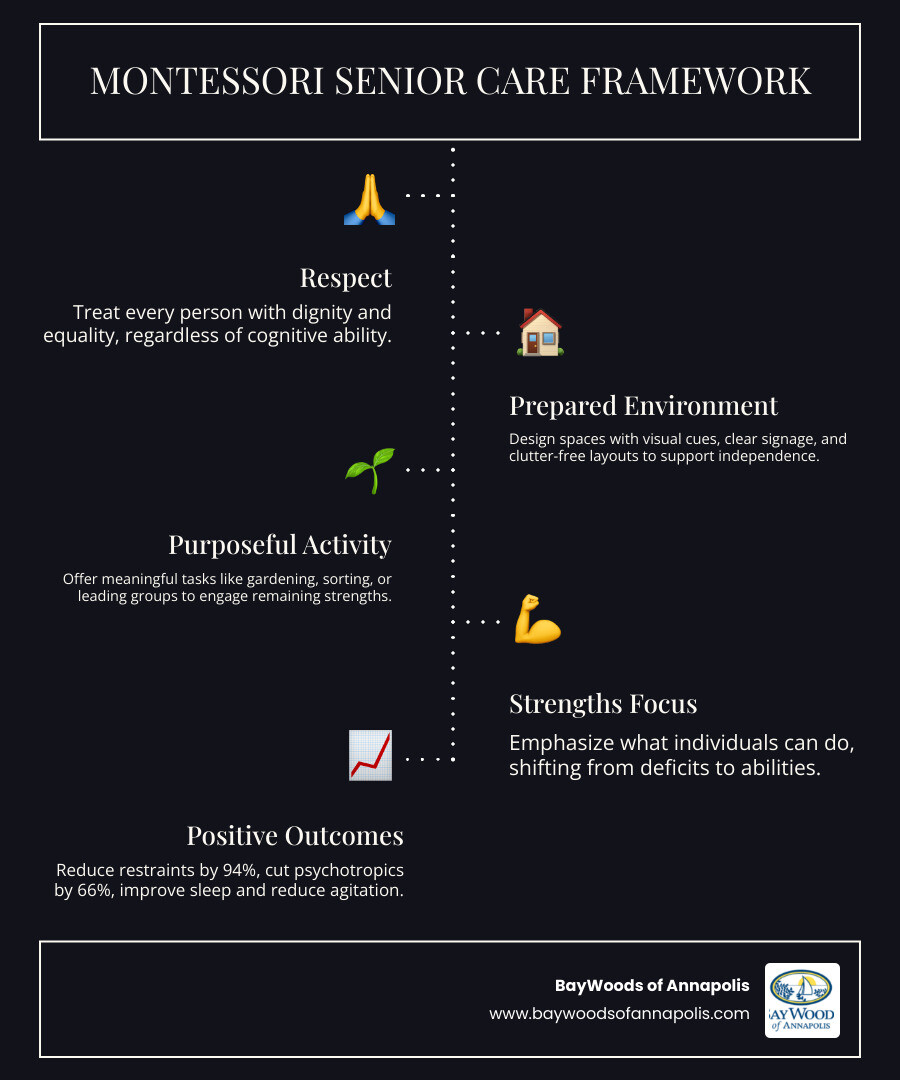
The foundation of this care model rests on four primary pillars: dignity, respect, equality, and independence. These aren’t just buzzwords; they are practical guidelines that dictate how every interaction occurs. Caregivers are trained to meet the senior exactly where they are today, emotionally letting go of “who they used to be” to support who they are now.
Promoting Retirement Brain Fitness involves more than just puzzles; it involves a lifestyle where the senior is respected as an equal partner in their care.
Creating a Prepared Environment
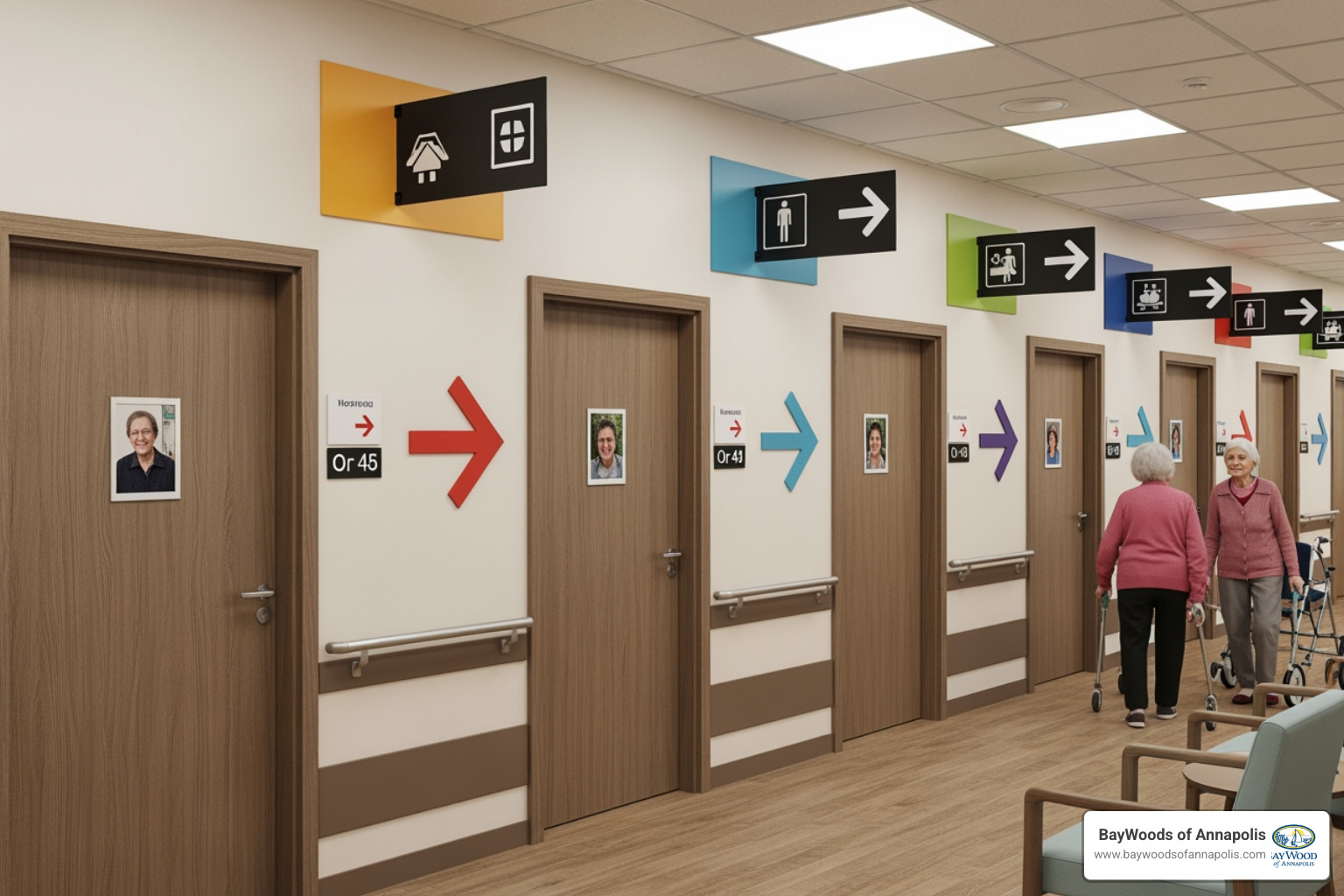
In Montessori senior care, the environment serves as a “silent guide.” If a person with dementia is confused, it is often because the environment has failed them, not because they have failed. To remedy this, Montessori communities use a “prepared environment” designed to reduce cognitive load and support independence. Key features include:
- Wayfinding Cues: Using personal photos and names on bedroom doors to help residents identify their space.
- High Contrast: Utilizing contrasting colors (like a white plate on a dark tablecloth) to help seniors see their food and utensils clearly.
- Green Signage: Research indicates that green is often the last color those with dementia lose the ability to see, making it ideal for important signs and name badges.
- Pictograms and Labels: Clear, simple signs with both words and pictures help residents find the “Kitchen,” “Library,” or “Garden” without needing to ask for directions.
- Decluttering: Removing “unhelpful stimulation” like loud TVs or unnecessary clutter that can cause agitation and confusion.
By tailoring the Memory Care environment this way, residents can navigate their world with confidence.
Purposeful Activities in Montessori Senior Care
Activities in a Montessori setting are never “busy work.” They are purposeful tasks that offer a sense of accomplishment. These activities are often broken down into simple, manageable steps using external aids or templates.
Examples of meaningful roles and tasks include:
- Gardening: Tending to herbs or flowers, which provides sensory stimulation and a connection to nature.
- Household Contributions: Folding laundry, setting tables, or sorting buttons. These tasks reinforce motor skills and provide a sense of utility.
- Resident-Led Clubs: A resident who was a lifelong engineer might lead a “Fix-it Club,” while a former librarian might manage the community’s book collection.
- Social Roles: Residents may take on roles such as “Welcoming Ambassador” for new neighbors or “Dining Committee Member” to help plan menus.
This focus on Assisted Living Care ensures that every day has a “why,” helping to reduce the boredom and loneliness that often plague traditional care settings.
Benefits and Evidence-Based Outcomes
The shift toward Montessori senior care isn’t just a trend; it’s backed by significant international research and data. When seniors are given a sense of purpose and a supportive environment, the clinical outcomes are often staggering.
| Outcome Category | Traditional Care Model | Montessori Senior Care |
|---|---|---|
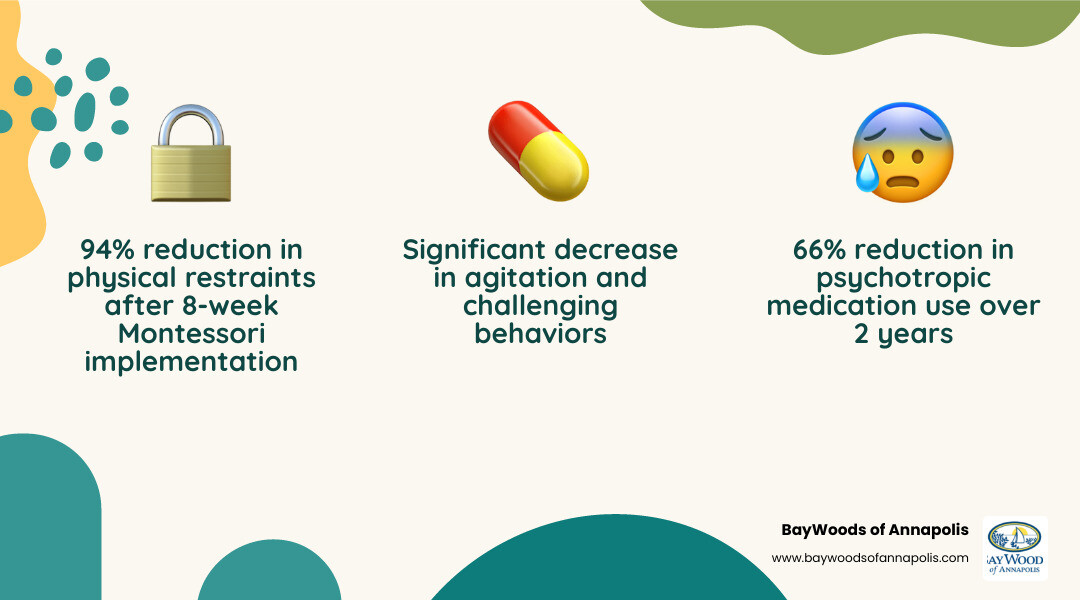
| Physical Restraints | Higher usage for “safety” | 94% reduction (8-week study) |
| Medication | Reliance on psychotropics | 66% reduction in 2 years |
| Agitation | Common due to frustration | Significant decrease in behaviors |
| Engagement | Passive (watching TV) | Active (helping, leading, doing) |
| Sleep Quality | Often disrupted | Improved sleep patterns reported |
In a Swiss study, psychiatric hospitalizations dropped from seven in six months to just one in two years after a Montessori program was implemented. These statistics show that when we treat Dementia Caregivers and their loved ones with a Montessori approach, we aren’t just improving their mood—we are fundamentally improving their health.
Impact on Staff and Caregivers
The benefits of Montessori senior care extend beyond the residents to the people who care for them. Traditional memory care can be exhausting for staff, often leading to high burnout rates. However, the Montessori method empowers staff by giving them a new set of tools.
Instead of struggling to manage “difficult behaviors,” staff learn to identify the unmet need behind the behavior. They use non-verbal communication—gestures, touch, and eye-level contact—to build trust. Because residents are more independent and engaged, staff can spend more time building relationships and less time performing tasks that residents are capable of doing themselves. This creates a more harmonious atmosphere in Specialized Memory Care Support units.
Certifications and Credentialing Levels
As the popularity of this method grows, several organizations have established standards to ensure communities are actually practicing what they preach. The Association Montessori Internationale (AMI) and the National Certification Board for Alzheimer Care (NCCDP) are two primary bodies providing guidance and certification.
One of the most recognized frameworks is the Montessori Inspired Lifestyle® (MIL) credentialing, which uses a tiered system to recognize a community’s commitment:
- Bronze Level: Focuses on foundational staff training across all departments and the implementation of basic Montessori principles.
- Silver Level: Requires residents to have a say in shared spaces and the ability to personalize their home-like areas.
- Gold Level: Represents the highest achievement, where residents lead innovative projects and the community has a long-term sustainability plan for the Montessori lifestyle.

Finding the Right Montessori Senior Care Community
When Evaluating Memory Care Excellence, families should look for specific markers of a true Montessori environment. Ask the following questions during a tour:
- Is the staff trained? Look for certifications like the Certified Montessori Dementia Care Professional (CMDCP).
- Is there a “prepared environment”? Check for high-contrast signage, labels on drawers, and accessible activity stations.
- Are residents active? Do you see residents folding laundry, watering plants, or leading groups, or are they mostly sitting in front of a television?
- Is there resident governance? Are there committees where residents help make decisions about dining or activities?
A true Montessori community will feel less like a hospital and more like a busy, purposeful home.
Frequently Asked Questions about Montessori Senior Care
How can families implement Montessori principles at home?
You don’t need to live in a specialized community to benefit from these ideas. Families can support their loved ones by:
- Labeling Everything: Put a picture and a word on the bathroom door or the cabinet where the coffee mugs are kept.
- Reducing Noise: Turn off the background TV or radio, which can be overstimulating and confusing for someone with memory loss.
- Offering Two Choices: Instead of asking “What do you want to wear?”, hold up two shirts and ask “The blue one or the red one?” This preserves autonomy without causing “choice paralysis.”
- Breaking Down Tasks: If your loved one wants to help with dinner, give them one specific task, like snapping green beans, rather than asking them to “help cook.”
Is Montessori care only for individuals with dementia?
No. While it is incredibly effective for memory support, the principles of autonomy, respect, and lifelong learning are universal. Many assisted living and even independent living residents find that a Montessori-inspired lifestyle helps them stay active and connected. It’s about aging successfully by remaining a “doer” rather than a “receiver” of care.
What specific training do Montessori care professionals receive?
Professionals often undergo a rigorous curriculum, such as the 6-hour CMDCP course. This training covers the history of the Montessori method, how to treat dementia as a disability, and techniques for staff engagement. They learn to use “multidisciplinary learning circles” to solve problems and focus on empathy-based engagement rather than just clinical checklists.
Conclusion
Montessori senior care represents a profound shift in how we approach the later stages of life. By focusing on the person’s strengths and creating an environment that fosters independence, we can transform the experience of aging from one of decline to one of continued growth and purpose.
At BayWoods of Annapolis, we understand the importance of dignity and resident-led living. As a resident-owned Continuing Care Retirement Community (CCRC) located on the beautiful shores of the Chesapeake Bay in Annapolis, MD, we pride ourselves on a culture of governance and engagement. Our waterfront apartments are the largest in the area, providing a spacious and comfortable environment for our members to thrive.
Whether you are looking for independent living or onsite healthcare, our commitment to the well-being of our residents is at the heart of everything we do. Experience specialized Memory Care at BayWoods of Annapolis and see how a focus on purpose and respect can make all the difference.