
Beginner’s Guide to Montessori-Inspired Lifestyle® Memory Care
The Shift from Clinical Memory Care to Living Well with Dementia
Montessori-Inspired Lifestyle® Memory Care is an evidence-based, person-centered approach to dementia care that focuses on what residents can do — not what they’ve lost.
Quick answer: Here’s what you need to know at a glance:
| What it is | A philosophy of care adapted from Maria Montessori’s educational method, applied to adults living with dementia |
|---|---|
| Who developed it | Dr. Cameron Camp, through the Center for Applied Research in Dementia (CARD) |
| Core idea | Build on existing strengths, skills, and senses to promote independence and dignity |
| Key difference from traditional care | Residents have meaningful roles and real choices — it’s a social model, not a clinical one |
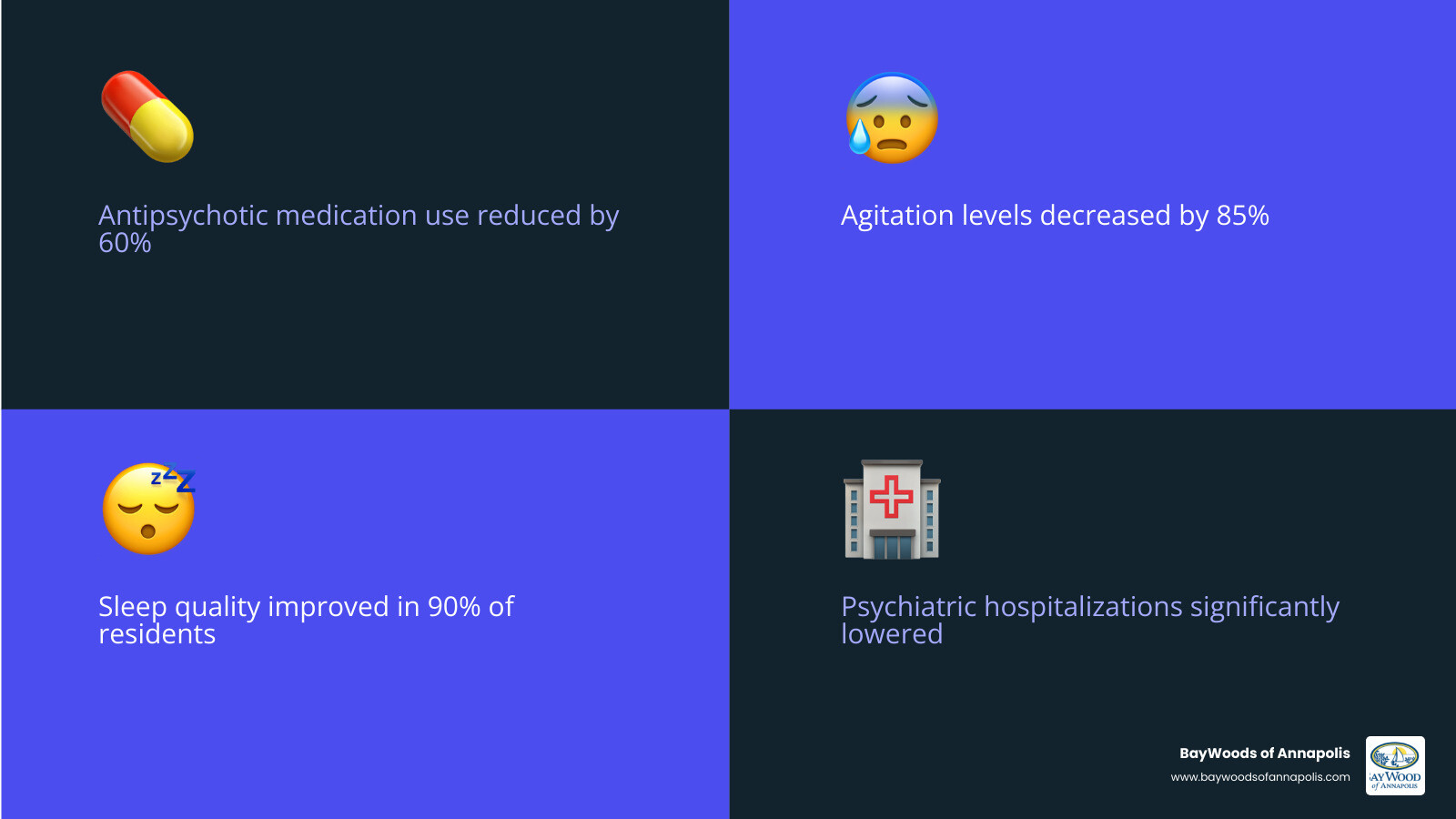
| Proven results | Antipsychotic use down 60%, agitation down 85%, sleep improved in 90% of residents |
| Who it’s for | Adults at any stage of dementia, in assisted living, memory care, or nursing settings |
For too long, dementia care followed a medical model — focused on managing symptoms, minimizing risk, and maintaining safety. That often meant more medications, more restrictions, and less life.
The Montessori-Inspired Lifestyle® flips that script entirely.
Instead of asking “what does this person need help with?” it asks “what can this person still do, contribute, and enjoy?” The results — backed by research across dozens of communities — are striking. Residents are more engaged, calmer, and healthier. Staff stay longer. Families notice the difference.
At BayWoods of Annapolis, this philosophy aligns with a deeply held belief: that aging well means living fully — with purpose, dignity, and community.
This guide walks you through everything you need to know about the Montessori-Inspired Lifestyle® approach: where it came from, how it works, what the evidence shows, and what to look for in a credentialed community.
What is Montessori-Inspired Lifestyle® Memory Care?
At its heart, Montessori-Inspired Lifestyle® Memory Care is a rehabilitation-based approach to dementia care. While many people associate the name “Montessori” with preschools, the principles of independence, respect, and a “prepared environment” are just as powerful for older adults.
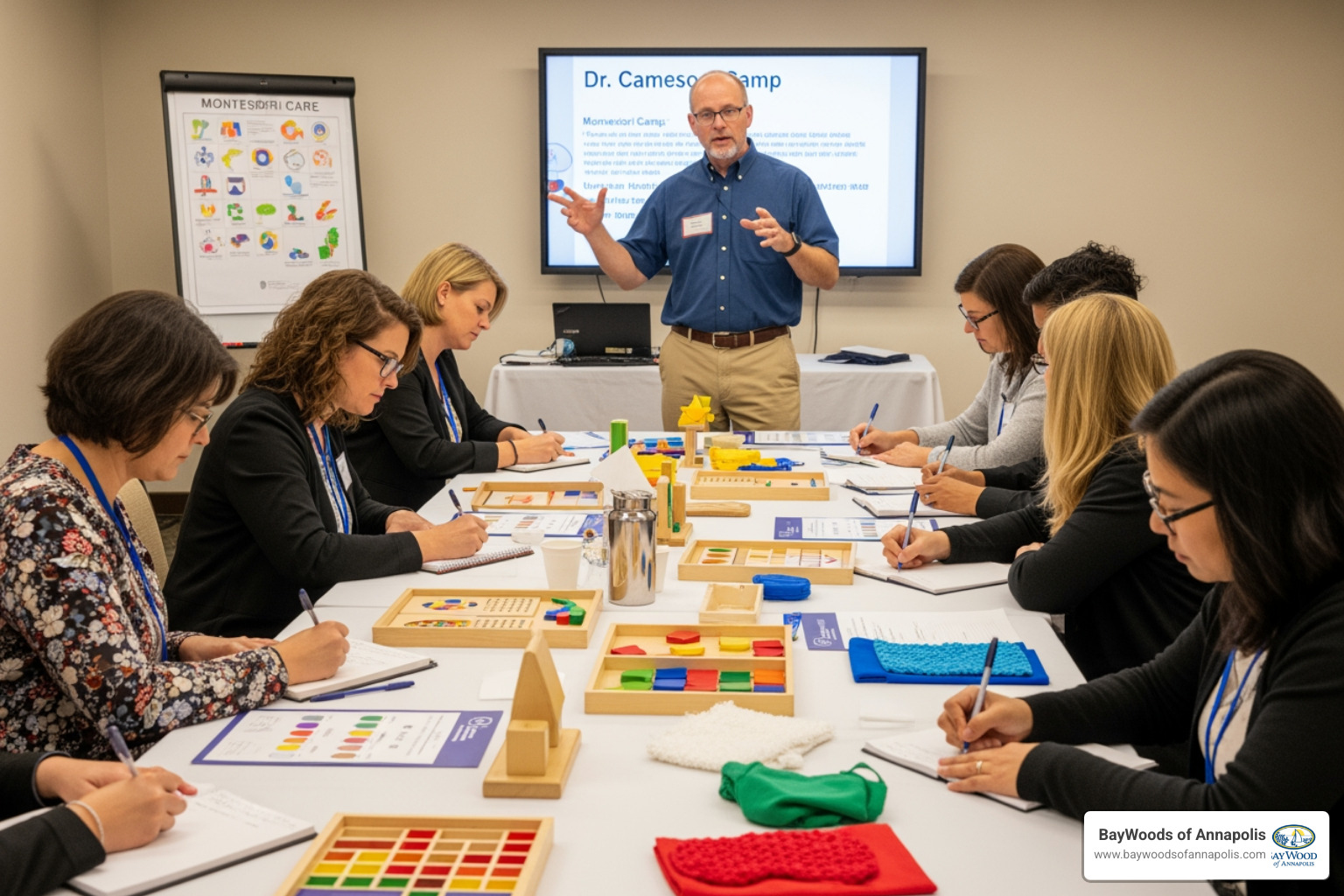
Developed by Dr. Cameron Camp and the Center for Applied Research in Dementia (CARD), this method treats dementia similarly to how one might approach a physical disability or a condition like Down Syndrome. It isn’t about “fixing” the brain; it’s about adapting the world around the person so they can function at their highest possible level.
By focusing on Brain Health, this approach leverages “procedural memory” (also known as muscle memory) and the five senses. Even when short-term memory fades, the ability to fold a towel, plant a seed, or set a table often remains intact because those actions are stored in a different part of the brain.
Historical Background and Development
The journey from the classroom to the memory care neighborhood began over 20 years ago. Maria Montessori, Italy’s first female physician, originally developed her method for children who were considered “unteachable.” She discovered that by providing the right tools and a structured environment, these children could thrive independently.
Dr. Cameron Camp recognized that these same educational principles could be adapted for adults with cognitive challenges. He realized that “memory” isn’t a single bucket; while “declarative memory” (names, dates, facts) is often damaged by dementia, “procedural memory” (how to do things) remains accessible much longer. By making environments cognitively accessible, we allow residents to bypass their deficits and engage with their strengths.
Distinguishing Montessori from Traditional Care
In a traditional clinical setting, a resident might be woken up, dressed, and fed by staff members according to a strict schedule. While well-intentioned, this “doing for” model often leads to “learned helplessness,” where residents lose skills faster because they aren’t allowed to use them.
The Montessori-Inspired Lifestyle® Memory Care model is a social model. It replaces the “patient” identity with that of a “community member.”
| Feature | Traditional Medical Model | Montessori-Inspired Lifestyle® |
|---|---|---|
| Focus | Deficits and “lost” abilities | Strengths and remaining skills |
| Daily Life | Staff-led activities and schedules | Resident-led roles and choices |
| Environment | Clinical, sterile, or “locked” feel | Prepared, labeled, and navigable |
| Caregiver Role | “Doing for” the resident | Partnering with the resident |
| Goal | Safety and symptom management | Purpose, dignity, and independence |
The Core Principles and Seven Tenets of the Montessori Approach
The foundation of this approach rests on seven core tenets that prioritize the human spirit. These include treating every individual with dignity, respect, and equality. It is a way of life that assumes every person, regardless of their diagnosis, has something to contribute.
A major focus is Retirement Brain Fitness, which isn’t just about puzzles; it’s about active participation in one’s own life. When residents are given real choices—what to wear, what to eat, how to spend their afternoon—their anxiety drops and their confidence grows.
Creating the Prepared Environment
In Montessori care, the environment is the “teacher.” If a resident can’t find their room or doesn’t know what’s inside a drawer, it’s not a “symptom” of dementia; it’s a failure of the environment.
Communities implementing this approach use:
- Visual Cues: High-contrast signs with both words and pictures.
- Wayfinding: Using landmarks and colors (like green, the last color visible to many dementia patients) to help residents navigate.
- Life Stations: Areas dedicated to familiar tasks, such as a gardening bench, a nursery station, or an office desk, which encourage spontaneous engagement.
- Environmental Simplification: Reducing clutter and “noise” that can lead to overstimulation and confusion.
These supports are essential components of Onsite Health Care Services, ensuring that the physical space itself promotes wellness.
Meaningful Engagement and Community Roles
One of the most transformative aspects of the Montessori-Inspired Lifestyle® Memory Care is the creation of community roles. Residents don’t just “attend” activities; they lead them.
A resident who was a former librarian might manage the community’s book collection. Someone who loved to host might serve as the “Welcome Ambassador” for new residents. These roles provide a sense of purpose that is often missing in traditional care. Intergenerational programs also play a huge role, allowing residents to interact with younger generations in a way that feels natural and productive. For Dementia Caregivers, seeing a loved one reclaim a sense of “self” through these roles is incredibly healing.
Measurable Benefits of the Montessori-Inspired Lifestyle®

The benefits of this approach aren’t just “feel-good” anecdotes; they are backed by hard data. When residents are busy, purposeful, and able to navigate their world, the “responsive behaviors” (like agitation or wandering) that often lead to heavy medication use begin to disappear.
Research into facilities using this method has shown that meaningful engagement is often the best “medicine” available. By integrating these practices into Assisted Living Care, providers see a drastic shift in resident health.
Evidence-Based Outcomes of Montessori-Inspired Lifestyle® Memory Care
The statistics from communities that have undergone Montessori-based training are staggering:
- Medication Reduction: Antipsychotic use has dropped by 60% in Skilled Nursing Facilities (SNFs) and 53% in Assisted Living. Hypnotic (sleep aid) use plummeted by a whopping 94% to 98%.
- Behavioral Improvements: Agitation decreased by up to 89%. Wandering—often a sign of a resident looking for something to do or somewhere to go—dropped by 87% in Assisted Living settings.
- Physical Health: Because residents are more active and less depressed, 93% of residents in these programs gained weight (a key indicator of health in seniors), and 90% saw improved sleep quality.
Improving Quality of Life through Montessori-Inspired Lifestyle® Memory Care
The ripple effect of this approach touches everyone in the community. When residents are happier, the environment becomes a more pleasant place to work.
- Employee Retention: Staff turnover is a major challenge in senior living. However, Montessori communities have seen employee retention increase by 22%.
- Community Vitality: Census growth—the number of people choosing to live in the community—increased by 41% in Assisted Living settings, as families sought out this empowering model.
- Reduced Hospitalizations: In one study, psychiatric hospitalizations dropped from seven incidents in six months to just one incident over two years.
These outcomes are vital for any high-quality Health Center looking to provide the best possible care for its residents.
The Credentialing Pathway: Bronze, Silver, and Gold Standards
Not every community that says they are “Montessori-inspired” has actually done the work. To ensure high standards, CARD established a credentialing pathway. This isn’t a one-time workshop; it’s a rigorous, multi-year commitment to organizational change.
Communities must achieve specific milestones and are reassessed every two years to maintain their status. You can view a current list of Montessori Inspired Lifestyle® Credentialed Communities to see which organizations are leading the way.
Bronze and Silver Milestone Achievements
The journey begins at the Bronze Level, which focuses on the “Learn” phase. All staff—from nurses to housekeeping—receive training. The community begins implementing basic memory supports and ensuring residents have at least one meaningful role.
At the Silver Level, the community moves into the “Implement” phase. This involves deeper staff education, more personalized resident histories, and the formation of a “Champions Group”—a dedicated team of staff members who meet monthly to coach their peers and solve challenges using Montessori principles. This level of On-site Care ensures that the philosophy is woven into the daily fabric of the community.
Reaching the Gold Level of Excellence
The Gold Level is the pinnacle of the program. To achieve this, a community must demonstrate “innovative achievement.” This often includes a “Gold Project”—a resident-led initiative that has a lasting impact on the community.
Gold-level communities undergo a half-day site verification visit by CARD experts to ensure that the principles of dignity, choice, and independence are truly being lived out. For families, choosing a community with this level of Memory Care provides peace of mind that their loved one is in an environment that truly honors their humanity.
Frequently Asked Questions about Montessori Memory Care
How does this approach handle responsive behaviors?
In the Montessori world, there is no such thing as a “problem behavior.” Instead, there are “unmet needs.” If a resident is agitated, staff look for the cause. Are they bored? Are they lost? Do they need a sense of purpose? By using “Learning Circles” and environmental cues, staff can often resolve the root cause of agitation without the need for sedatives.
Can residents with advanced dementia still participate?
Absolutely. Because the Montessori approach relies on the five senses and muscle memory, even those with significant cognitive decline can engage. A resident might not remember the name of a flower, but they can still enjoy the sensation of soil in their hands or the scent of a petal. Tasks are broken down into simple, manageable steps using the “three-period lesson” (Show, Recognize, Recall) to ensure success and prevent frustration.
What resources are available for families?
Families are encouraged to be partners in this journey. Many communities provide handbooks and checklists to help families understand how to support their loved ones. Learning to offer “choices” (e.g., “Would you like the blue shirt or the red one?”) rather than asking open-ended questions can make a world of difference in home interactions. This approach is a core part of modern Assisted Living.
Conclusion
The Montessori-Inspired Lifestyle® Memory Care approach is more than just a set of activities; it is a fundamental shift in how we view aging and dementia. It proves that a diagnosis does not mean the end of a meaningful life.
At BayWoods of Annapolis, we understand that the best care happens in a place that feels like home—and a true home is a place where you have a voice, a role, and a purpose. As a resident-owned Continuing Care Retirement Community (CCRC) located on the beautiful shores of the Chesapeake Bay, BayWoods is committed to the values of resident governance and high-quality care.
Whether you are looking for the largest waterfront apartments in Annapolis or the peace of mind that comes with onsite healthcare, our community is designed to support your independence at every stage.
Ready to see how a purposeful life continues after a dementia diagnosis? Discover Montessori-Inspired Lifestyle® Memory Care at BayWoods