
Annapolis Alzheimer’s Care: Finding the Best Fit
Why Finding the Right Alzheimer’s Care in Annapolis Matters
Alzheimer’s care in Annapolis is something thousands of Maryland families are actively navigating right now — and the options can feel overwhelming.
Here is a quick look at the main care paths available locally:
| Care Type | Best For | Setting |
|---|---|---|
| In-home care | Early to mid-stage, prefers familiar surroundings | Private home |
| Assisted living | Needs daily support but remains socially engaged | Residential community |
| Memory care | Moderate to advanced dementia, needs secure environment | Dedicated memory care unit or community |
| Life-Care Community (CCRC) | Planning ahead, wants all care levels in one place | Full-service retirement campus |
The stakes are real. Approximately 6.7 million Americans aged 65 and older are living with Alzheimer’s today. In Maryland alone, that number is projected to surpass 130,000 individuals by 2025 — a rise of nearly 17% in just a few years. And because Alzheimer’s is a progressive disease, the level of care a person needs today will almost certainly change.
For families in Annapolis, that means choosing a care setting isn’t just about right now. It’s about finding a community that can adapt as needs evolve — without uprooting your loved one every few years.
This guide walks you through every major Alzheimer’s care option in Annapolis, what to look for, what it costs, and how to make a confident decision.
Understanding Alzheimer’s Care Options in Annapolis

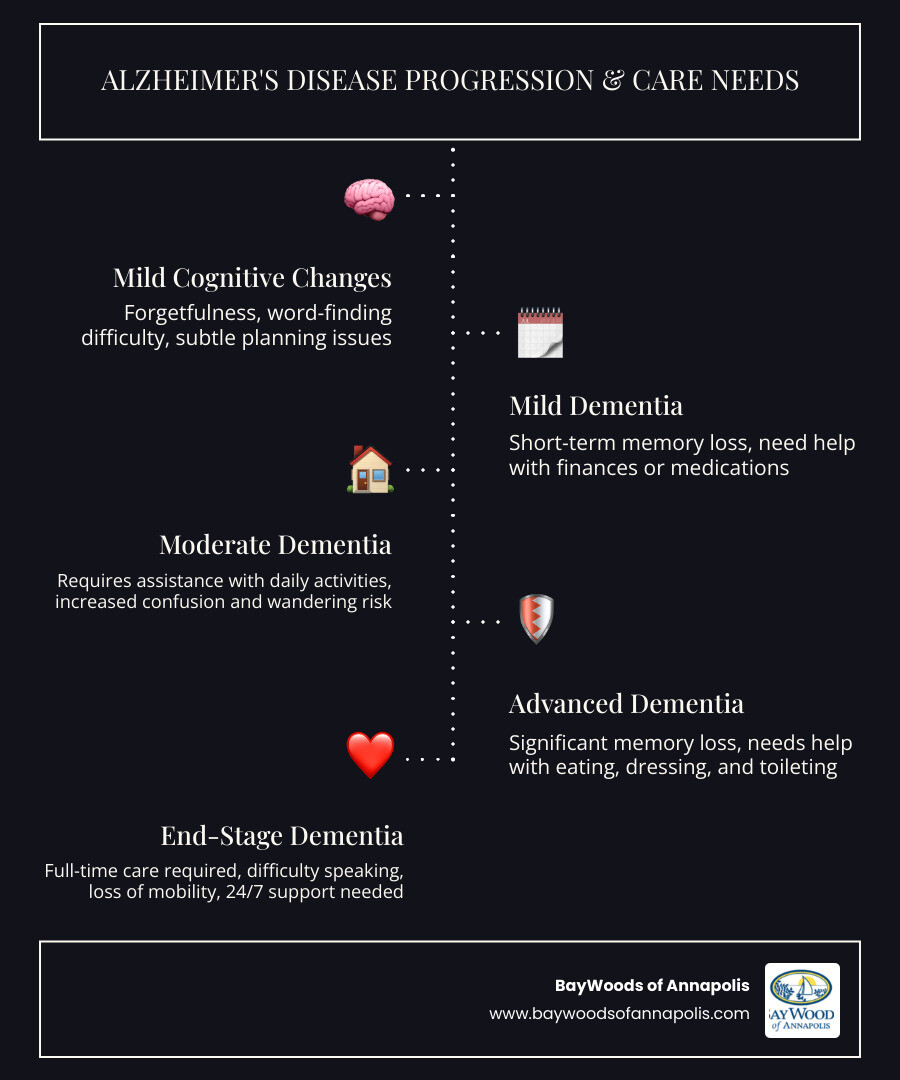
When a loved one receives a diagnosis of Alzheimer’s or another form of dementia, the first question is usually: “Where is the safest place for them to be?” In Annapolis, the answer depends heavily on the stage of the disease and the specific needs of the caregiver.
In-Home Support
For many, the journey begins with in-home care. This allows a senior to remain in familiar surroundings while receiving help with meal preparation, medication reminders, and personal hygiene. In-home care can range from a few hours of companionship a week to 24/7 professional supervision. While this maintains a sense of “normalcy,” it can become incredibly taxing for family members who often provide over 16 billion hours of unpaid care annually across the United States.
Assisted Living vs. Memory Care
As the disease progresses, many families transition to Assisted Living. This is ideal for seniors who need help with “Activities of Daily Living” (ADLs)—like dressing or bathing—but do not yet require a high-security environment.
However, there is a distinct line between standard assisted living and dedicated memory care. Memory care is a specialized tier of support designed specifically for those with cognitive impairment. These environments are secured to prevent wandering and staffed by professionals trained in dementia-specific communication and behavioral management.
| Feature | In-Home Care | Assisted Living | Memory Care |
|---|---|---|---|
| Setting | Private Residence | Residential Apartment | Secured Neighborhood |
| Socialization | Limited to visitors | High (Group activities) | High (Specialized/Structured) |
| Safety | Home modifications needed | General oversight | 24/7 Secure monitoring |
| Staff Training | General caregiving | Senior care basics | Advanced Dementia training |
| Cost Basis | Hourly or daily | Monthly rent + care | Monthly (Higher due to ratios) |
The Power of the Continuing Care Retirement Community (CCRC)
A Continuing Care Retirement Community (CCRC) offers a “Life-Care” model that is particularly beneficial for Alzheimer’s planning. In a CCRC like BayWoods of Annapolis, a resident can enter as an independent senior and have guaranteed access to assisted living, memory care, and skilled nursing on the same campus. This prevents the emotional trauma of moving to a completely new facility when health needs change.
Professional Assessments: Safety vs. Socialization
How do you know which level is right? It usually comes down to two factors: safety and socialization. If a loved one is at risk of leaving the stove on or wandering out the front door, a secured environment is necessary. Conversely, if a senior is physically safe but becoming increasingly isolated and depressed at home, the social engagement found in a community setting can actually slow the perceived rate of cognitive decline.
Specialized Programs and Therapies for Alzheimer’s Care Annapolis
The best Alzheimer’s care Annapolis has to offer goes beyond just keeping residents safe; it focuses on active Brain Health and emotional well-being. Modern memory care has moved away from purely clinical models toward holistic, person-centered approaches.
Montessori-Inspired Lifestyle®
At the forefront of innovative care is the Montessori-Inspired Lifestyle®. This approach, based on the educational principles of Maria Montessori, focuses on what an individual can do rather than what they have lost. By providing purposeful roles—such as helping set a table or leading a small gardening group—residents maintain a sense of dignity and self-worth. It turns “care” into “living.”
Spaced-Retrieval Therapy
For those in the Memory Care at BayWoods, specialized techniques like Spaced-Retrieval Therapy are used. This is a scientifically validated method that helps residents retain information by asking them to recall it over increasing intervals of time. It is particularly effective for remembering safety procedures or the names of new staff members, fostering a sense of success and reducing frustration.
Non-Pharmacological Approaches
High-quality providers prioritize non-drug interventions to manage “responsive behaviors” (such as agitation or sun-downing). This includes:
- Sensory Engagement: Using tactile objects, aromatherapy, or weighted blankets to provide comfort.
- Music Therapy: Tapping into long-term musical memory to improve mood and trigger positive associations.
- Art Programs: Allowing residents to express emotions that they may no longer be able to put into words.
Staffing and Training
The efficacy of these programs relies entirely on the people delivering them. In Annapolis, top-tier communities maintain higher staff-to-resident ratios in memory care units compared to general assisted living. Furthermore, look for communities where staff undergo specific dementia-care certifications, ensuring they understand the neurological reasons behind certain behaviors rather than just reacting to them.
Safety, Security, and Quality of Life in Memory Care

A primary reason families seek Alzheimer’s care Annapolis is the need for a “fail-safe” environment. However, a secure facility shouldn’t feel like a locked ward; it should feel like a protected neighborhood.
Wayfinding and Environmental Design
Dementia can make simple tasks like finding one’s bedroom terrifying. Leading Annapolis communities use “wayfinding” cues to help. This includes:
- Visual Directional Aids: Using bold colors or distinct artwork to mark different hallways.
- Personalized Signage: Placing a “memory box” outside a resident’s door filled with photos and mementos from their life to help them identify their room.
- Circadian Lighting: Special lighting systems that mimic natural sunlight patterns to help regulate sleep-wake cycles and reduce evening confusion.
Physical Security
To prevent wandering (a common and dangerous symptom of Alzheimer’s), communities utilize key-coded magnetic locks and security cameras. Many also employ 24-hour awake staff who perform regular safety checks—often every two hours—to ensure residents are comfortable and safe through the night.
Supporting the Support System
Alzheimer’s is often called “the long goodbye,” and it takes a massive toll on families. Many providers offer Dementia Caregivers Support through monthly groups or virtual sessions. These resources allow families to share experiences and learn coping strategies from professionals and peers alike.
Furthermore, technology is bridging the gap between facility and family. Many Annapolis providers now use communication apps that provide daily updates, photos, and even videos of a loved one participating in activities, offering peace of mind to families who can’t visit every day.
Navigating the Cost of Alzheimer’s Care Annapolis
Talking about money is never easy, but understanding the financial landscape of Alzheimer’s care Annapolis is crucial for long-term planning. Maryland is an expensive state for senior care, and Annapolis—with its high quality of life and waterfront locations—tends to reflect that.
Typical Pricing Structures
In Maryland, the average cost of memory care generally ranges from $6,000 to $8,500 per month, though specialized or high-end facilities in the Annapolis area can exceed $11,000 per month.
- Studio Units: Often the most common option, averaging around $8,200 locally.
- Semi-Private/Companion Suites: A more budget-friendly option where two residents share a suite, typically ranging from $7,700 to $9,500.
- Level of Care Fees: Be aware that many communities charge a base rent plus “levels of care” based on how much physical assistance the resident needs.
The Life-Care Advantage
For those looking at a CCRC model, the pricing structure is different. Residents typically pay an entry fee and a monthly service fee. In exchange, they receive Onsite Health Care Services for life. This model acts as a form of asset protection; even if a resident’s needs escalate from independent living to full-time memory care, their monthly costs remain predictable and often lower than the market rate for standalone memory care.
Respite Care: A Short-Term Option
If you are a family caregiver who needs a break, or if you want to “test drive” a community, look for respite care. In Annapolis, these short-term stays (usually 14 to 30 days) typically cost around $300 per day. It’s an excellent way to provide the senior with professional stimulation while the primary caregiver recharges.
Choosing the Right Alzheimer’s Care Annapolis Community
Selecting a community is a deeply personal decision. While brochures and websites provide a starting point, nothing replaces an in-person visit.
The Professional Evaluation
Before a resident moves in, a community will conduct a professional nursing evaluation. This isn’t just a formality; it’s a way to ensure the facility can actually meet the resident’s medical and behavioral needs. Use this time to ask for Senior Health Tips from the staff and see how they interact with your loved one during the assessment.
Your Tour Checklist
When visiting a Health Center or memory care unit, look past the décor. Pay attention to:
- The “Smell” Test: Is the facility clean and fresh?
- Staff Engagement: Are the caregivers interacting with residents, or are they clustered at a nursing station?
- Resident Appearance: Do the residents look well-groomed and engaged?
- Outdoor Access: Is there a secure outdoor space where residents can enjoy fresh air safely?
Resident Governance and Personalization
In some communities, like BayWoods of Annapolis, resident-led committees play a role in the culture of the home. This level of engagement ensures that the community truly reflects the desires of those who live there. When choosing a home, ask how personalized the care plans are. Will they honor your father’s lifelong habit of waking up at 5:00 AM? Will they ensure your mother has access to the classical music she loves?
Frequently Asked Questions about Alzheimer’s Care
How do I know when it’s time for memory care?
It is time to consider professional memory care when safety becomes a daily concern. This includes “elopement” (wandering away from home), forgetting to eat or drink, or mismanaging critical medications. Another major indicator is caregiver burnout; if the primary caregiver’s own health is suffering due to the demands of 24/7 supervision, a transition is often the most loving choice for everyone involved.
What is the average cost of Alzheimer’s care in Maryland?
As of 2026, the average cost for a private memory care room in Maryland is approximately $8,200 per month. However, this can range from $6,000 on the lower end to over $11,000 for luxury or highly specialized waterfront communities in the Annapolis area.
What safety features are standard in Annapolis memory care?
Standard features include key-coded magnetic locks on all exits, security cameras in common areas, and emergency call bells in every room. Most high-quality Annapolis communities also implement 2-hour safety checks during the night and use intuitive, circular floor plans that prevent residents from reaching “dead ends,” which can cause significant anxiety.
Conclusion
Finding the right Alzheimer’s care Annapolis isn’t just about finding a room; it’s about finding a community that sees the person behind the diagnosis.
At BayWoods of Annapolis, we believe that a diagnosis of Alzheimer’s shouldn’t mean the end of a meaningful life. As a resident-owned CCRC, we offer a unique environment where the residents themselves have a voice in how the community is run. Combined with our stunning waterfront views of the Chesapeake Bay and our commitment to specialized Memory Care Services, we provide a setting where seniors can thrive in safety and dignity.
Whether you are in the early stages of research or facing an immediate need, you don’t have to navigate this journey alone. Annapolis is home to world-class resources, compassionate professionals, and communities designed to provide your loved one with the very best quality of life possible.