
Whole Hearted Healing through Holistic Memory Care
Why Holistic Memory Care Changes Everything for Families Navigating Dementia
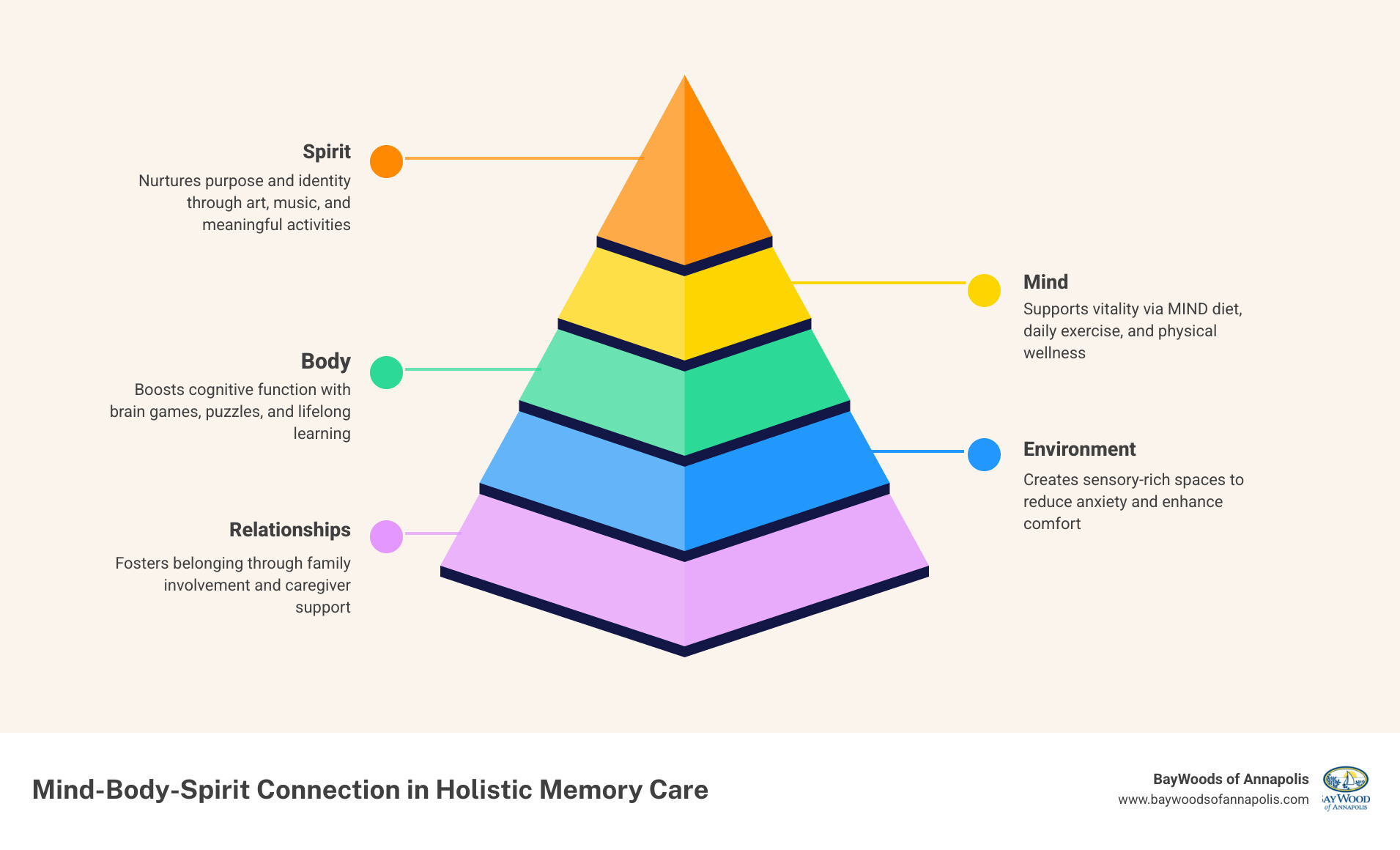
Holistic memory care is an approach to dementia and Alzheimer’s support that treats the whole person — not just the symptoms. Instead of focusing only on medication and cognitive decline, it weaves together mental stimulation, physical wellness, emotional support, and spiritual meaning into a single, person-centered plan.
Here is a quick summary of what it includes:
- Mind — cognitive stimulation, brain games, lifelong learning, and mental health support
- Body — tailored exercise, brain-healthy nutrition (like the MIND diet), and physical safety
- Spirit — art therapy, music therapy, meaningful activities, and connection to personal identity
- Environment — sensory-rich, familiar spaces designed to reduce anxiety and confusion
- Relationships — family involvement, caregiver training, and community belonging
Memory loss affects far more than memory. It changes how a person connects, expresses themselves, and experiences the world around them. A diagnosis does not erase who someone is — and the best care honors that fully.
As our population ages and dementia becomes more prevalent, families are rightly asking for something better than a purely medicalized model. They want care that preserves dignity, fosters joy, and supports every dimension of a person’s life.
That is exactly what holistic memory care is designed to do.
Defining Holistic Memory Care: A Whole-Person Approach
In the landscape of senior living in May 2026, the term “holistic” has moved from the fringes of wellness to the center of clinical excellence. At its core, Holistic memory care is a philosophy that views the mind, body, and spirit as an inseparable unit. When a person experiences cognitive decline, it isn’t just a neurological event; it is a life event that impacts their emotional resilience, their physical vitality, and their sense of place in the world.
This approach moves beyond the “maintenance” mindset. Instead of simply managing a resident’s decline, holistic care seeks to enhance their humanity. It asks: How can we help this person thrive today? This might mean adjusting a meal plan to include brain-boosting antioxidants or organizing a morning of “brain fitness” to keep neural pathways firing. For those interested in how these concepts apply to active aging, you can find More info about retirement brain fitness to see how staying sharp starts long before a diagnosis.
| Feature | Traditional Medical-Model Care | Holistic Person-Centered Care |
|---|---|---|
| Primary Focus | Symptom management & safety | Quality of life & total well-being |
| Environment | Clinical, hospital-like settings | Therapeutic, home-like, sensory-rich |
| Nutrition | Standardized dietary requirements | Personalized, brain-healthy (MIND/DASH) |
| Activities | Generic group entertainment | Personalized, meaningful engagement |
| Caregiver Role | Task-oriented (meds, bathing) | Relationship-oriented & empathetic |
Understanding the Difference from Traditional Care
Traditional memory care often relies heavily on a medical model. In these settings, the day is structured around “tasks”—medication passes, meal times, and scheduled hygiene. While safety is a priority, the environment can feel sterile or restrictive, which ironically often increases the agitation and “sundowning” symptoms it aims to prevent.
In contrast, Holistic memory care prioritizes individualized history. If a resident spent forty years as a gardener in Anne Arundel County, their care plan shouldn’t just include a generic walk; it should include the tactile experience of potting soil or the scent of lavender. This requires multidisciplinary collaboration between nurses, nutritionists, life-enrichment coordinators, and families to ensure the resident’s unique story remains the focal point of their daily life.
Why a Holistic Approach is Essential in 2026
As we navigate the mid-2020s, our understanding of the brain has evolved. We now know that depression and anxiety are not just side effects of dementia—they are often drivers of faster decline. By addressing emotional health, we can actually slow the progression of symptoms.
Holistic care provides a sense of belonging and autonomy that is often stripped away in traditional settings. When a resident is given choices—what to wear, what to eat, or which song to listen to—it reinforces their identity. In a world that can feel increasingly confusing, these small anchors of control are vital for reducing the fear and isolation often associated with memory loss.
The Three Pillars: Mind, Body, and Spirit in Holistic Memory Care
To implement a truly comprehensive program, care must be built on three sturdy pillars. If one is missing, the structure of well-being begins to lean.

Cognitive Stimulation and Mental Health in Holistic Memory Care
The “Mind” pillar is about more than just remembering names. It is about neuroplasticity—the brain’s ability to form and reorganize synaptic connections, especially in response to learning or experience. Cognitive stimulation in a holistic setting involves:
- Lifelong Learning: Engaging in new topics or hobbies that challenge the brain.
- Executive Function Games: Puzzles and strategy games that require problem-solving.
- Validation Therapy: Communicating with residents in a way that respects their current reality, reducing the stress of “being wrong.”
Mental health is also a priority. Personalized cognitive engagement ensures that a resident isn’t just “busy,” but is meaningfully challenged. You can find More info about brain health to understand the science behind keeping the mind active.
Physical Vitality and Nutrition
The “Body” pillar is where the science of longevity truly shines. Research has shown that nutrition is a powerful tool in the fight against cognitive decline. Specifically, following the MIND diet (a hybrid of the Mediterranean and DASH diets) is associated with a slower decline in cognition equivalent to being 7.5 years younger.
Exercise is the other half of this equation. Dementia patients often have dangerously low levels of Brain-Derived Neurotrophic Factor (BDNF), a protein that acts like “Miracle-Gro” for the brain. Regular aerobic exercise—at least 30 minutes per day, 5 to 7 days per week—can boost BDNF levels, improving attention and executive function. It isn’t just about physical fitness; it’s about pumping oxygenated, nutrient-rich blood to the parts of the brain that need it most.
Nurturing the Spirit through Holistic Memory Care
The “Spirit” pillar is often the most overlooked in traditional settings, yet it is arguably the most important for quality of life. Spiritual well-being isn’t necessarily about religion—though it can be—it’s about purpose, connection, and self-esteem.
- Art Therapy: Painting or sculpting allows for non-verbal expression when words fail. It stimulates the brain and provides a sense of accomplishment.
- Music Therapy: Music is often the “last out” in the brain. Familiar songs can evoke deep memories and reduce agitation more effectively than some medications.
- Animal-Assisted Therapy: Interacting with a therapy dog or cat can lower heart rates and blood pressure while providing a sense of companionship that is purely emotional and non-judgmental.
Evidence-Based Natural Treatments and Environmental Design
While the “holistic” label sounds warm and fuzzy, the best programs are rooted in hard data. We must be discerning about what works and what is simply marketing hype.
The Role of Supplements and Natural Remedies
In the quest for a “cure,” many families turn to supplements. However, evidence-based skepticism is necessary. For example, the Ginkgo Evaluation and Memory (GEM) Study, which followed 3,000 individuals aged 75 or older, found no statistical difference in dementia rates between those taking ginkgo biloba and those taking a placebo. Similarly, the ADCS DHA study showed that 2 grams of DHA daily provided no overall benefit for those with mild to moderate Alzheimer’s.
However, there are bright spots:
- Vitamin B: Clinical trials found small improvements in cognitive function for patients with mild cognitive impairment, particularly those with high homocysteine levels.
- Vitamin D3: Essential for those with low levels, though it should be monitored by a physician.
- Omega-3s: While not a cure, maintaining healthy levels is part of a brain-healthy lifestyle, though the FDA recommends limiting intake to no more than 3 grams of DHA/EPA daily.
Always consult with a physician before introducing supplements, as they can interact with prescribed medications.
Environmental Modifications for Comfort and Safety
The physical space where care happens is itself a form of therapy. A holistically designed environment in Annapolis, MD, should feel like a home, not a ward.
- Predictable Routines: Structure reduces the “cognitive load” on a resident, making the day feel safe.
- Sensory Tools: Using aromatherapy—such as lavender for evening calm or rosemary and citrus for morning alertness—can gently guide a resident’s circadian rhythm.
- Nature-Based Therapy: Gardening or simply spending time in a secure outdoor courtyard can reduce anxiety.
- Lighting and Signage: Natural light helps maintain sleep-wake cycles, while clear, high-contrast signage helps residents maintain independence and navigate their space without frustration.
Implementing Personalized Care and Caregiver Support
No two people experience memory loss in the exact same way. Therefore, a “one-size-fits-all” care plan is inherently flawed. We do things differently at BayWoods of Annapolis.
Enhancing Outcomes through Personalized Care Plans
A personalized care plan begins with a deep dive into a resident’s life story. Where did they grow up? What was their career? Do they prefer tea or coffee? These details allow caregivers to use redirection techniques that feel natural. If a resident is agitated and wants to “go home,” a caregiver who knows they were a librarian might redirect them by asking for help “organizing” a bookshelf.
This person-centered approach must be culturally sensitive and evolve as the resident’s needs change. It also requires community involvement—ensuring that residents still feel like part of the broader Annapolis community through social events and family visits.
Supporting the Support System: Caregiver Training
Effective holistic care is impossible without a well-trained, empathetic staff. Caregivers need more than just medical training; they need “heart” training. This includes:
- Empathy Training: Learning to see the world through the resident’s eyes.
- Stress Management: Caregiving is demanding; staff need support to prevent burnout.
- Respite Services: Providing families with the break they need to remain healthy and supportive.
For families taking on this role at home, education is the best defense against the “caregiver burden.” You can find More info about dementia caregivers to help navigate the emotional and practical hurdles of this journey.
Frequently Asked Questions about Holistic Memory Care
How does holistic memory care differ from traditional assisted living?
While assisted living provides help with activities of daily living (ADLs) like bathing and dressing, Holistic memory care is specifically designed for those with cognitive impairment. It features a secure environment, higher staff-to-resident ratios, and specialized programming like sensory therapy and cognitive stimulation that are not typically found in standard assisted living.
Are natural supplements like Ginkgo biloba effective for dementia?
Current large-scale studies, including the GEM study, suggest that Ginkgo biloba is no more effective than a placebo in preventing or slowing dementia. While some supplements like Vitamin B may help specific populations (those with high homocysteine), most “memory boosters” lack rigorous clinical evidence. Always speak to a doctor before starting any regimen.
How can families support a holistic approach at home?
Families can implement holistic principles by establishing a consistent daily routine, prioritizing a MIND-style diet, and ensuring the home is safe but sensory-rich. Incorporating 30 minutes of physical activity and using music or art for engagement can significantly improve a loved one’s mood and function.
Conclusion
At BayWoods of Annapolis, we believe that a diagnosis of dementia is a change in a person’s journey, not the end of their story. As a resident-owned Continuing Care Retirement Community (CCRC), we pride ourselves on a culture of resident governance and high-quality onsite healthcare.
Our location on the shores of the Chesapeake Bay provides a naturally therapeutic backdrop for healing. With the largest waterfront apartments in the region, we offer a setting that honors the dignity of every individual while providing the specialized support required for memory-related challenges. Whether it is through our brain-healthy dining, our therapeutic gardens, or our compassionate, specially trained staff, we are committed to the “Whole-Hearted Healing” that every senior deserves.
If you are looking for a community that treats your loved one as a whole person—mind, body, and spirit—we invite you to Explore our Holistic Memory Care services and see the BayWoods difference for yourself.